
Why Sprinkler Systems Fail in South Florida
Why sprinkler systems fail in South Florida and what to do about each cause, from shallow caprock to lightning damage.
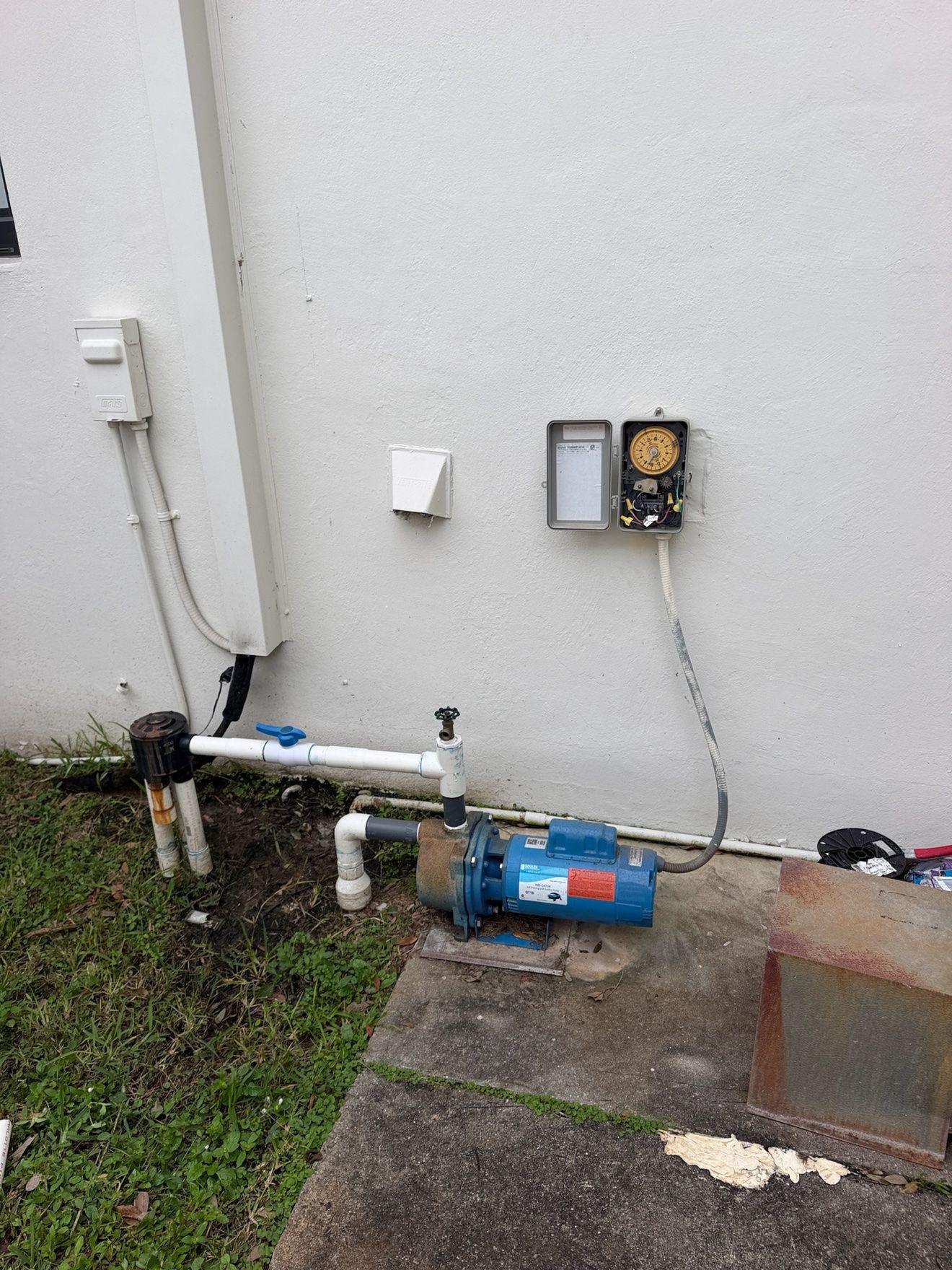
South Florida is hard on sprinkler systems. The heat, the rain, the sandy soil, the salt air, and the rock under your lawn all work against pipes, heads, valves, and controllers. A system that would last for years in another part of the country can start breaking down here in a fraction of that time.
Most failures are not bad luck. They come from a handful of local causes that show up again and again on the same streets, year after year. Most of them can be caught early, before a small leak turns into a dead lawn or a water bill that makes no sense.
Here are the seven reasons sprinkler systems fail in South Florida, what each one looks like, and what fixes it.
1. Shallow Caprock Limits How Deep Pipes Can Go
Under much of South Florida sits a layer of limestone called caprock. In many yards it is only a few inches below the surface, and digging through it takes heavy equipment. So pipes often end up buried much shallower than they should be.
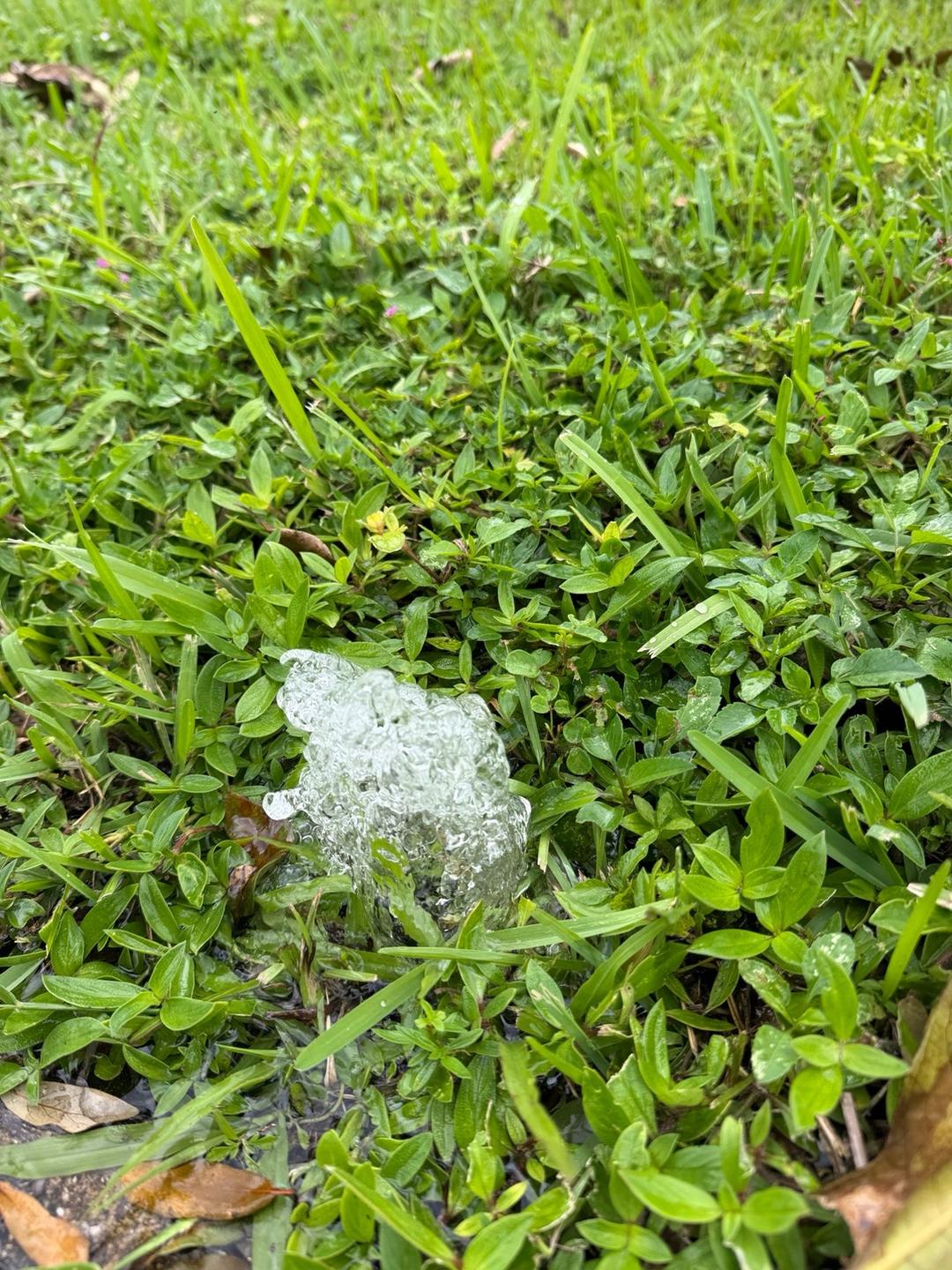
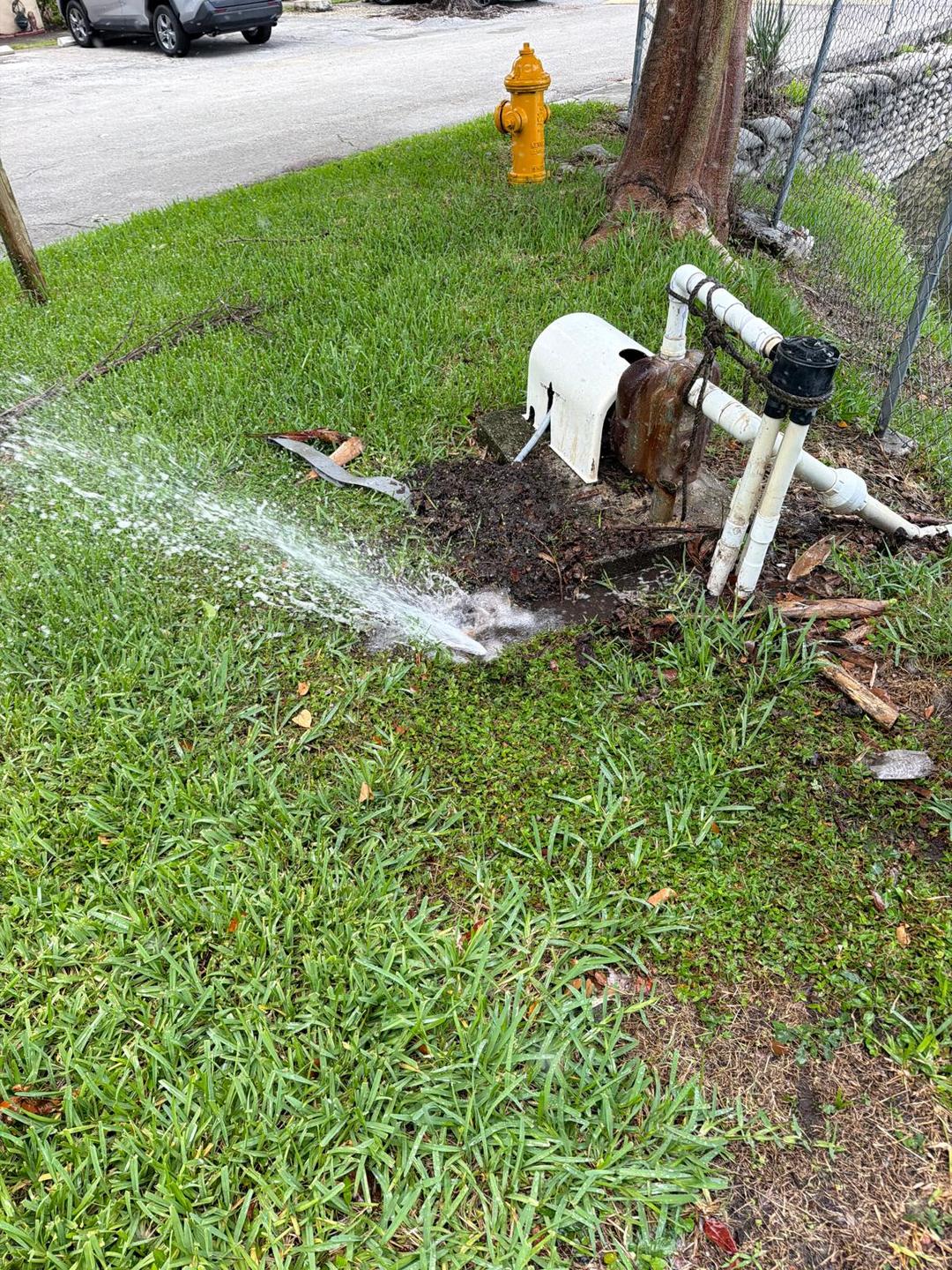
Shallow pipes break. A lawn mower wheel, a car tire on the grass, a shovel, or even heavy foot traffic can crack a pipe that sits just under the surface. The signs are easy to miss at first: a wet spot that never dries, a zone that loses pressure, or one area of grass that grows faster and greener than the rest because it is getting extra water from a leak underground.
The fix is to find the break, repair the pipe, and get it as deep as the ground allows. If you notice a soggy patch or a zone that suddenly waters weakly, that is usually a broken pipe. Our team handles sprinkler leak repair
2. Ficus Roots Break Pipes and Lift Heads
Ficus trees are everywhere in South Florida, and their roots are aggressive. They grow toward water, straight toward sprinkler lines. A root can squeeze a pipe until it cracks, push a head out of the ground, or tilt a head so it sprays the sidewalk instead of the lawn.
The signs are a head that sits crooked or higher than the others, a head that pops up and then will not go back down, or a zone that loses pressure for no clear reason. You may also see roots wrapped around a pipe when a section of lawn is opened up.
The fix is to clear the roots from the line, repair or replace the damaged pipe, and reset the heads so they sit level and spray where they should.
3. Chinch Bugs Look Exactly Like Drought
Chinch bugs are one of the most common reasons a South Florida lawn turns yellow in patches, and they are also one of the most misread. The grass looks dry, so the homeowner waters more. The grass keeps dying anyway, because the problem was never a lack of water.
Chinch bugs feed on St. Augustine grass, They suck the sap out of the blades and leave behind yellow, then brown, patches that spread outward, usually starting in the sunniest parts of the yard. The patches do not recover with extra watering, and they often show up in the hottest months of the year.
The fix starts with the right diagnosis. If yellow patches keep growing even though the sprinklers run on schedule, check for chinch bugs before you change anything in the system. Watering more only wastes water.
4. Summer Lightning Burns Controllers and Valves
South Florida is the lightning capital of the country, and summer storms arrive almost every afternoon. A nearby strike can send a surge through the power lines and into a sprinkler controller, or through the ground and into the valve wires buried in the yard.
The signs show up right after a storm: a controller with a blank screen, a controller that turns on but will not run any zone, or one or two zones that stop responding while the rest work fine.
The fix is to test the controller and the valve solenoids and replace whatever the surge destroyed. A controller that has been hit by lightning is not worth trusting, even if it seems to work again. When a controller needs to go, we install a new one, and a WiFi controller makes it easier to manage watering from your phone. See our WiFi sprinkler controller upgrade
After a big storm, always check that every zone still runs.
5. Salt Air Corrodes Parts Near the Coast
If you live near the coast, the air itself works against your system. Salt in the air speeds up corrosion on metal parts: screws, nozzles, valve components, and the metal inside a controller box. Parts that would last for years inland can wear out much faster a few blocks from the water.
The signs are heads that stick or spray unevenly, nozzles that clog with crusty buildup, and valve parts that seize up or leak at the seams.
The fix is to replace corroded parts with corrosion-resistant ones and to check coastal systems more often than inland ones.
6. Sandy Soil Shifts and Leaves Heads Tilted or Buried
South Florida soil is mostly sand, and sand moves. Heavy rain washes it away from around heads and pipes, foot traffic packs it down, and over time heads end up tilted, sunken, or buried under a layer of sand and grass.
A tilted head sprays the driveway instead of the lawn. A buried head barely sprays at all, and the grass above it turns brown. A sunken head gets clipped by the mower and starts leaking. The signs are dry spots in the lawn that sit right next to wet spots, or a head you can barely see anymore.
The fix is regular: raise sunken heads, level tilted ones, and clear sand and grass from around them. Heads should sit level and spray in a full, even pattern.
7. The Two-Day Watering Rule and Watering at the Wrong Hours
Most of South Florida limits lawn watering to two days a week, with specific hours, and the rules are enforced. Watering on the wrong day or during banned hours can bring a fine, but it also hurts the lawn. Watering in the heat of the day loses most of the water to evaporation, and watering late at night leaves the grass wet for hours, which invites fungus.
The signs are a lawn that stays thirsty even though the system runs, brown patches that spread after a wet spell, or a warning from the water utility.
The fix is to set the controller to your assigned watering days and to run zones in the early morning, before the sun is strong. If your controller is old and hard to program, installing a new WiFi controller makes the schedule easy to set and easy to check from anywhere.
What to Check Before You Call
Walk your yard once a month and look for the signs above: wet spots, heads that are tilted or buried, zones that lose pressure, yellow patches that do not respond to watering, and a controller that behaves strangely after a storm. Catching a problem early is almost always a smaller repair than waiting until the lawn shows it.
If you find more than one of these signs, or you are not sure what you are looking at, get a professional look. A full check of the system finds the cause instead of guessing at it,
CallTechCare offers a free inspection of your sprinkler system. We will check every zone, every head, and every valve, tell you exactly what is wrong, and explain what the repair involves. Call us at (786) 366-2729 to schedule your free inspection. For repairs, see our sprinkler repair and installation
Dry-Season Sprinkler Checklist for Miami Homes
Miami's dry season starts in November and December. Run through this…
Miami-Dade and Broward Irrigation Rebates: What Homeowners Get Back
Two counties, two rebate programs, one goal: help you water smarter and spend…
Miami-Dade and Broward Watering Rules: Days, Hours and Exceptions
Both counties limit lawn watering to two days a week, on days set by your…
Why Sprinkler Systems Fail in Broward County
Broward is hard on sprinkler systems for the same seven local reasons as the…
Miami Sprinkler Systems: Repair, Install & Care
Every Miami sprinkler system has the same parts: a controller, valves, pipes…
Smart Sprinkler System Repair in Miami
Your smart sprinkler system should water on schedule and skip rainy days. When…
Sprinkler Repair in Miami: What We Fix and How the Visit Works
A broken sprinkler in Miami wastes water every cycle and dries out your lawn…
How to Find a Sprinkler Leak in Your Yard (Miami Guide)
A sprinkler leak wastes water every time the system runs. Here are the 7 signs…
Common Sprinkler System Problems and How to Fix Them
Heads not popping up, valves leaking, low pressure or a zone that won't turn on…
Need Expert Help?
Our team is ready to help with sprinkler, irrigation, and security camera services
Get in Touch